
Hangeul, the Korean alphabet, was created by King Sejong the Great. At the time of its invention, it was called Hunminjeongeum (訓民正音), meaning “the correct sounds for instructing the people.”
Today, we will look at why King Sejong created Hunminjeongeum and how deeply he cared for his people.
한글은 세종대왕이 창제한 글자이다. 창제 당시의 명칭은 훈민정음(訓民正音)으로, ‘백성을 가르치는 바른 소리’라는 뜻을 담고 있다.
오늘은 세종대왕이 훈민정음을 만들게 된 배경과, 그가 얼마나 백성을 사랑했던 위대한 임금이었는지를 살펴보자.

단어장
기사 본문
한글날의 유래
10월 9일은 한글날이다. 세종대왕의 한글 창제를 기념하고, 한글의 우수성을 널리 알리기 위해 국가가 지정한 국경일이다.
한글날의 기원은 1926년으로 거슬러 올라간다. 일제강점기 조선어연구회(현재의 한글학회)가 민족정신을 고취하기 위해 ‘가갸날’로 제정한 것이 그 시작이었다.
훈민정음의 탄생
세종대왕은 1443년에 훈민정음을 처음 창제하였다.
당시 조선에는 조선어를 표기할 고유 문자가 없었기 때문에, 중국의 한자를 빌려 썼다. 그러나 한자는 조선어와 구조가 달라 매우 어렵고, 배우기 힘들었다.
특히 글을 배울 기회가 없던 일반 백성들과 여성들은 대부분 문자를 읽거나 쓸 수 없는 ‘까막눈’이었다. 이들은 억울한 일을 당해도 글을 모른 탓에 자신의 사정을 호소할 방법이 없었다.
약노 사건과 세종의 충격
세종대왕이 훈민정음을 만들 결심을 굳히게 된 계기 중 하나는 약노 사건이었다.
『세종실록』에 따르면, 1433년 황해도 곡산에 살던 약노라는 여성이 살인 혐의로 구금되었다.
그녀는 단지 불쌍한 사람에게 밥을 나누어 주었을 뿐인데, 그 사람이 갑자기 죽자 ‘주술로 사람을 죽였다’는 억울한 누명을 쓰고 고문을 당했다.
10년이 넘는 세월 동안 옥살이를 하던 약노의 사건을 보고받은 세종대왕은 주술로 사람을 죽일 수 없다는 의문을 품고 재조사를 명하였다.
세종의 명을 받은 좌부승지 정분이 약노를 찾아가 임금의 말씀을 전하자, 약노는 통곡하며 자신은 주술을 모른다며 고문에 못 이겨 거짓 자백을 했다고 털어놓았다.
이에 세종대왕은 약노를 석방하고 음식을 하사하였다.
세종대왕은 이 사건에 큰 충격을 받았다. 만약 백성들이 글을 알아 억울함을 직접 글로 써서 호소할 수 있었다면, 이런 비극은 일어나지 않았을 것이라 생각한 것이다.
백성을 위한 글자, 훈민정음
세종대왕의 지극한 애민정신(愛民精神), 즉 백성을 사랑하는 마음은 훈민정음 창제의 밑거름이 되었다.
그는 백성들이 쉽고 정확하게 자신의 생각을 표현할 수 있는 글자를 만들기 위해 밤낮으로 노력하였다. 그 결과, 세상에서 가장 과학적이고 아름다운 문자 중 하나인 한글이 탄생했다.
오늘날 서울 광화문광장에 있는 세종대왕 동상 아래에는 세종이 남긴 업적을 기리는 세종이야기 박물관이 있다.
또한 용산의 국립한글박물관에서는 훈민정음 창제의 역사와 한글의 발전 과정을 자세히 살펴볼 수 있다.
서울을 방문한다면, 세종대왕의 애민정신이 깃든 이 두 곳을 꼭 한 번 둘러보길 추천한다.
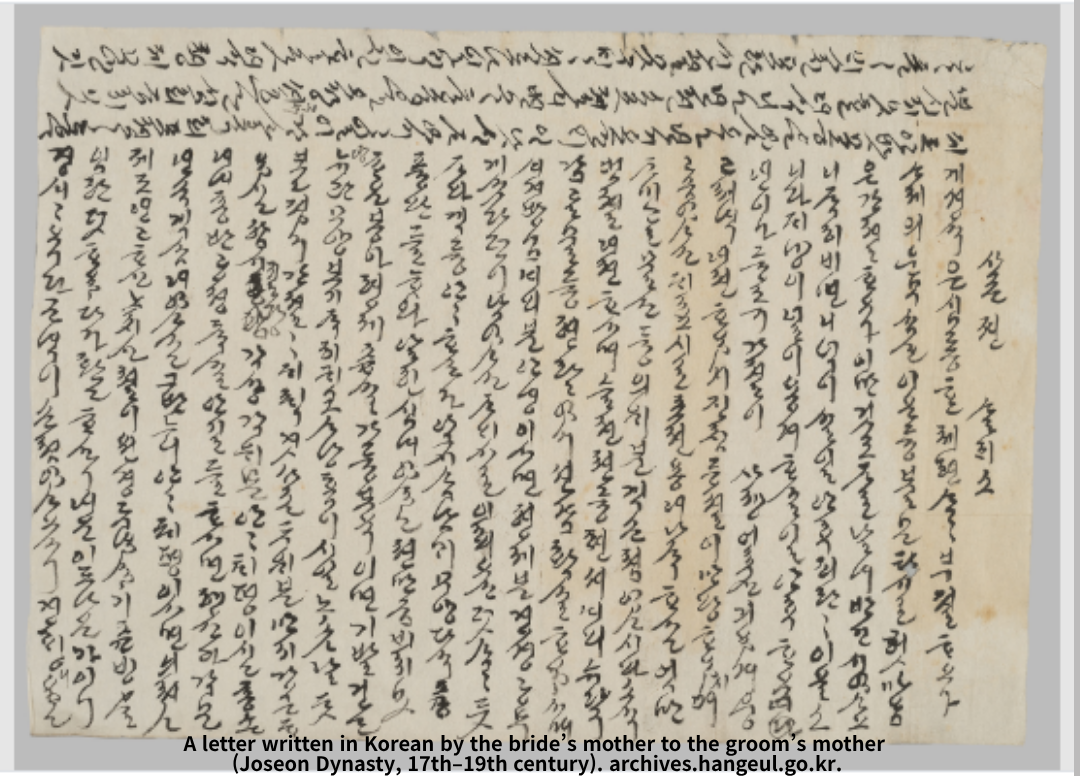
The Origin of Hangeul Day
October 9 is celebrated as Hangeul Day in
Korea. It is a national holiday established to commemorate the creation of
Hangeul and to promote its excellence to the world.
The first celebration took place in 1926,
during the Japanese colonial period, when the Joseon Language Research Society
(now the Korean Language Society) declared “Gagya Day” to inspire the Korean
people and preserve their national spirit.
The Birth of Hunminjeongeum
King Sejong completed the creation of
Hunminjeongeum in 1443.
Before then, Koreans had no writing system
of their own and had to borrow Chinese characters to record their language.
However, Chinese was not only complex but structurally different from Korean,
making it difficult to learn and use properly.
Most ordinary people and women, who had
little access to education, were illiterate and unable to read or write. This
meant that when they suffered injustice, they had no way to express their
grievances in writing.
The Case of Yakno and King Sejong’s
Compassion
One of the events that deeply moved King
Sejong to create a writing system was the case of Yakno.
According to The Annals of King Sejong
(Sejong Sillok), in 1433, a woman named 약노(Yakno) from
Goksan in Hwanghae-do was imprisoned for allegedly killing someone through
sorcery.
She had merely shared a meal with a poor
passerby, who later died suddenly. Despite her innocence, officials accused her
of having used a curse and tortured her to extract a confession.
After she had spent more than ten years in
prison, King Sejong heard about the case and doubted the claim that a person
could be killed by magic. He ordered a reinvestigation.
When Jeong Bun, a royal secretary,
personally conveyed the king’s message which urged her to speak truthfully,
Yakno broke down in tears and confessed that she had falsely admitted her guilt
under torture.
King Sejong immediately ordered her release
and sent her food as a gesture of compassion.
The king was profoundly shocked by the
injustice. He realized that if ordinary people had a writing system of their
own, they could record their grievances and appeal to him for justice directly.
This realization strengthened his resolve to create an script accessible to
everyone.
A Writing System for the People
King Sejong’s deep love and compassion for
his people—known in Korean as aemin jeongsin (애민정신)—became
the foundation for the creation of Hunminjeongeum.
He wanted a simple yet precise script that
all people, regardless of class or gender, could easily learn and use to
express themselves. Through his tireless efforts, one of the most scientific
and beautiful writing systems in the world—Hangeul—was born.
Today, visitors to Gwanghwamun Square in
Seoul can see the statue of King Sejong, beneath which lies the King Sejong
Story Exhibition Hall, dedicated to his life and achievements.
In Yongsan, the National Hangeul Museum
offers a deeper look into the history of Hunminjeongeum and the evolution of
the Korean language.
If you ever visit Seoul, these places are
well worth exploring to experience the spirit of King Sejong’s compassion and
his devotion to his people.

