
Tokyo, one of the world’s great metropolitan cities, is famous for its many tourist attractions. Among them, Akihabara is globally recognized as a sacred place for Otaku culture. Interestingly, people say of Seoul that it has a place with a similar nickname—“Hongkihabara.” The name alone evokes Tokyo’s Akihabara, but what exactly is Hongkihabara?
세계적인 대도시 도쿄는 수많은 관광지로 유명하다. 그중에서도 아키하바라는 오타쿠 문화의 성지로 전 세계에 널리 알려진 곳이다. 그런데 서울에도 이와 비슷한 이름을 가진 공간이 있다고 한다. 바로 ‘홍키하바라’다. 이름만 들어도 도쿄의 아키하바라를 연상시키는데, 과연 서울의 홍키하바라는 어떤 곳일까?

단어장
기사 본문
오늘날 세계 각국의 젊은이들이 서울을 찾는다. 그중에서도 전 세계 젊은 세대에게 가장 인기 있는 서울의 핫플레이스를 꼽자면 단연 홍대입구역 일대, 흔히 말하는 ‘홍대’다.
최근에는 성수동이 감각적인 상점과 카페, 팝업 스토어, 레트로 감성의 건물과 거리 풍경으로 국내외 MZ세대의 큰 사랑을 받고 있지만, 홍대는 과거부터 지금까지 꾸준히 젊은이들이 가장 많이 찾는 지역이라는 점에서 여전히 독보적인 위치를 차지하고 있다.
과거의 홍대는 인디 밴드들의 성지이자 클럽과 감각적인 바가 밀집한 힙한 동네였다. 홍익대학교가 미술로 유명했던 만큼, 홍대 정문 일대에는 국내 유수의 미술 입시학원들이 즐비했다. 학원 거리를 걷다 보면 클래식한 미술 작품은 물론, 만화나 일러스트 전시물을 자연스럽게 접할 수 있었다.
이처럼 홍대는 기성세대가 향유하던 문화와는 결이 다른, 다양한 서브컬처가 공존하는 독특한 상권이었다.
하지만 홍대를 찾는 젊은이들이 늘어나면서 임대료는 급격히 상승했고, 그 결과 인디 밴드들은 하나둘씩 홍대를 떠나기 시작했다. 개성 있는 의류와 소품을 판매하던 상점들 역시 치솟는 임대료를 감당하지 못해 문을 닫았다. 입시학원들이 강남으로 이전하면서, 홍대의 미술학원들 또한 점차 자취를 감췄다.
여기에 코로나19 팬데믹이 겹치며 상황은 더욱 달라졌다. 온라인 상거래와 SNS가 급속도로 확산되자 젊은이들은 오프라인 상점을 찾기보다 집에서 혼술을 즐기며 OTT 콘텐츠를 소비하는 데 익숙해졌다.
OTT 시청이 일상화되면서 일본 애니메이션의 인기도 눈에 띄게 높아졌다. 엔저 현상과 한일 교류의 증가로 일본을 방문하는 한국인 역시 크게 늘었다. 『귀멸의 칼날』, 『진격의 거인』과 같은 작품들은 한국에서도 큰 인기를 얻었고, 리메이크된 『슬램덩크』는 40대 세대에게 강한 향수를 불러일으키며 극장가와 서점가에 돌풍을 일으켰다.
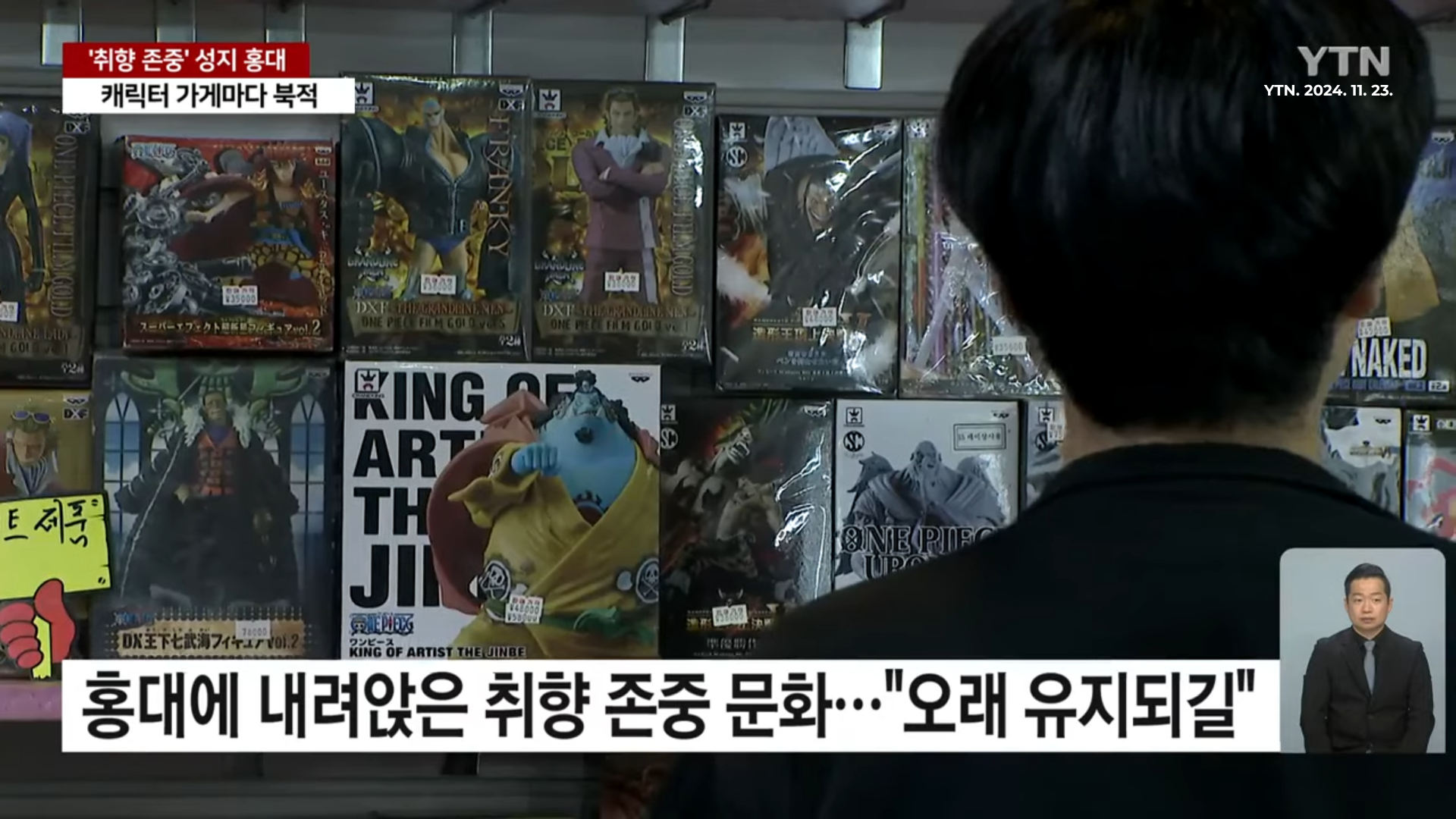
이러한 흐름 속에서 홍대 상권은 점차 변화하기 시작했다. 일본의 아키하바라에서 볼 수 있는 각종 애니메이션 굿즈와 관련 상품을 판매하는 상점들이 홍대에 들어서기 시작한 것이다. 과거 인디 밴드와 힙합 클럽이 중심이었던 홍대는, 어느새 오타쿠 문화의 성지로 탈바꿈했다.
애니메이션 팬덤은 관련 굿즈를 수집하는 문화를 활성화했고, 이러한 오타쿠 문화는 홍대 상권의 핵심 판매 아이템으로 자리 잡았다. 연예인 팬덤에서 시작된 굿즈 수집 문화 역시 오타쿠 문화와 닮은 점이 많았고, 이 과정에서 비주류로 인식되던 오타쿠 문화는 점차 대중적인 문화 콘텐츠의 한 영역으로 받아들여지게 되었다.
이처럼 오타쿠 문화가 홍대 상권에 깊숙이 뿌리내리면서, 홍대는 ‘홍키하바라’라는 별명으로 불리기 시작했다. 실제로 홍대는 일본의 젊은이들 사이에서도 서울을 방문하면 꼭 들러야 할 대표적인 관광지 중 하나로 꼽힌다.
현재의 홍대는 애니메이션 굿즈 상점뿐만 아니라, 빈티지 제품, 감각적인 패션과 뷰티 상품, 젊은 세대의 취향을 저격하는 독특한 퓨전 요리를 선보이는 식당들까지 밀집한 매력적인 상권이다.
홍대 상권은 결코 사라지지 않았다. 시대의 변화에 맞춰 새로운 모습으로 멋지게 부활했다. 홍대는 여전히 젊은이들의 거리이며, 서울을 찾는 관광객이라면 꼭 한 번 방문해 볼 만한 장소다.


Today, young people from all over the world are drawn to Seoul. Among the city’s many hotspots, the area around Hongdae Station, commonly referred to as Hongdae, stands out as one of the most popular destinations for young visitors worldwide. In recent years, Seongsu-dong has gained attention for its stylish shops, cafés, pop-up stores, and retro urban scenery, attracting both Korean youth and international Gen-Z travelers. Even so, Hongdae maintains a uniquely prominent position as a place that young people have consistently flocked to, from the past to the present.
In its earlier days, Hongdae was known as a mecca for indie bands, as it was filled with clubs and stylish bars that defined the neighborhood’s edgy character. As Hongik University is renowned for fine arts, the area around its main gate was once lined with prestigious private academies for art. Walking through the streets, one could stumble not only upon classical artworks but also upon manga and illustration exhibitions. Hongdae thus developed into a distinctive commercial district where different subcultures flourished, in a way that was quite different from the mainstream culture enjoyed by older generations.
However, as more young people began visiting Hongdae, the prices of rent increased dramatically. Indie bands gradually left the area, and unique clothing and accessory shops were forced to close down under the pressure of soaring costs. As they relocated to Gangnam, private art academies also disappeared from Hongdae.
The situation worsened even further after the COVID-19 pandemic. With the rapid growth of online commerce and social media, young people became accustomed to staying home, enjoying streaming services and drinking alone rather than visiting actual stores. Moreover, as streaming platforms became part of everyday life, the popularity of Japanese animation surged. Combined with the weak Japanese yen and increased cultural exchange between Korea and Japan, more Koreans began traveling to Japan. Animes such as Demon Slayer and Attack on Titan gained massive popularity in Korea, while the remade version of Slam Dunk sparked nostalgia among people in their 40s, creating a sensation in theaters and bookstores alike.
Amid these changes, Hongdae’s commercial district began to change. Shops selling anime-related goods and collectibles, similar to those found in Akihabara, started appearing throughout the area. Once centered on indie music and hip-hop clubs, Hongdae gradually evolved into a new hub for Otaku culture.
Anime fandoms energized the culture of collecting anime merchandise, and Otaku culture became one of the key drivers of sales in Hongdae. The fan culture that used to follow celebrities also contributed to the popularization of Otaku activities, as both cultures share similar practices of collecting and supporting. What was once considered a niche interest came to be recognized as a legitimate and meaningful part of contemporary culture.
As Otaku culture has taken root in Hongdae, the area earned the nickname “Hongkihabara.” Today, Hongdae is also one of the most popular destinations for young Japanese travelers visiting Seoul.
Modern Hongdae is home not only to anime merchandise shops but also to vintage stores, fashion and beauty brands with distinct identities, and restaurants offering creative fusion cuisine that appeals to the tastes of young people.
Hongdae’s commercial district has not disappeared—it has reinvented itself. Reborn in a new form that reflects the changing times, Hongdae remains a street of youth and a must-visit destination for anyone traveling to Seoul.

