
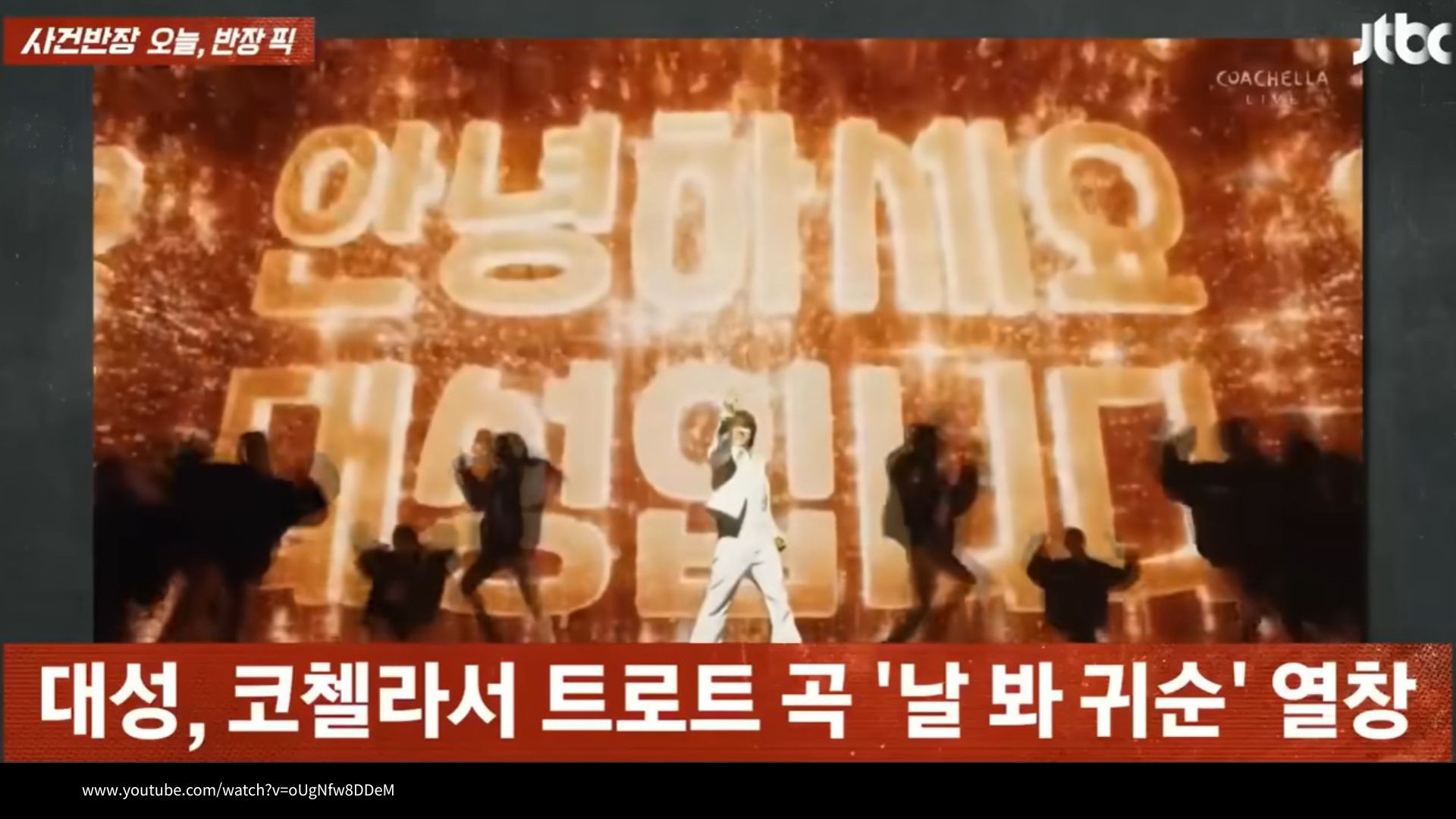
In April 2026, at the Coachella Valley Music and Arts Festival in California, Korean artist Daesung delivered a bold and unforgettable performance that electrified the crowd. The songs he performed—“한도초과 (Exceeding Limits)” and “날 봐 귀순 (Look at Me, Gwisoon)”—were both trot tracks sung entirely in Korean.
2026년 4월, 캘리포니아에서 열린 코첼라 음악 축제에서 한국 대성은 파격적인 무대를 선보이며 현장을 뒤흔들었다. 그가 부른 ‘한도초과’와 ‘날 봐 귀순’은 모두 한국어 가사로만 이루어진 트로트 곡이었다.
단어장
기사 본문
Coachella Valley Music and Arts Festival는 세계에서 가장 트렌디한 음악 축제 중 하나다. 그 무대에서 영어 가사 한 줄 없이, 한글 자막만을 띄운 채 꺾기와 요성이 살아 있는 트로트를 부른다는 것은 상식적으로 무모한 도전처럼 보일 수 있다. 그러나 결과는 정반대였다. 트로트의 ‘뽕끼’는 설명이 필요 없는 감각이기 때문이다. 머리로 이해하기 전에 몸이 먼저 반응한다. 대성이 보여준 파격의 핵심은 결국 “가장 한국적인 것을 가장 자신 있게” 내세웠다는 점이다. 번역하거나 희석하지 않고, 날것 그대로 전달했다.
트로트를 단순히 일제강점기에 외부에서 유입된 음악으로만 보는 시각은 절반만 맞다. 음을 구불구불 흘리는 시김새, 소리를 떨어 감정을 극대화하는 방식, 슬픔과 흥이 한 호흡 안에 공존하는 구조는 서양 리듬이 들어오기 훨씬 이전부터 한국인의 몸에 자리해 있던 요소들이다. 일제강점기에 서양의 2박자 리듬이 유입되었을 때, 이미 존재하던 한국적 정서가 그 위에 결합되며 형성된 것이 바로 트로트다. 이런 맥락에서 트로트와 민요는 사촌지간이라 할 수 있다. 이미자의 떨림, 나훈아의 꺾기는 판소리의 성음과 민요의 시김새와 같은 계통, 즉 한국인의 ‘소리 DNA’라 할 만하다.
오랫동안 트로트는 ‘부모님 세대의 음악’, ‘촌스러운 뽕짝’이라는 낙인을 안고 있었다. 이러한 인식이 바뀌기 시작한 계기는 2000년대 장윤정의 ‘어머나’였고, 2020년 미스터트롯의 폭발적인 인기로 흐름이 완전히 뒤집혔다. 임영웅을 비롯한 젊은 트로트 가수들이 등장하면서 10~30대까지 관심이 확장되었고, 한일 트로트·엔카 교류 경연까지 이어지며 트로트는 ‘옛날 음악’이 아니라 ‘뿌리 있는 음악’으로 다시 읽히기 시작했다.
흥미롭게도, 세계적으로 성공한 한국 가수들 가운데 ‘뽕끼 DNA’를 지닌 사례는 적지 않다. 정국의 목소리에는 한국 특유의 감성적인 꺾임이 묻어나고, 박효신, 이선희, 임재범 같은 발라드 가수들의 창법에도 민요와 트로트에서 이어진 성음의 감각이 남아 있다. 심지어 싸이의 ‘강남스타일’ 속 어깨춤 그루브에도 뽕끼 특유의 흥이 스며 있다. K팝이 서양 장르를 적극적으로 흡수해 왔지만, 그 바닥에 깔린 한국적 정서는 여전히 살아 있는 셈이다.
포르투갈의 Fado, 아르헨티나의 Tango, 미국의 Blues는 모두 한과 흥이 뒤섞인 서민의 감정을 담아내며, 각기 독보적인 세계 팬층을 구축해 왔다. 트로트 역시 그 가능성을 충분히 지니고 있다. 다만 조건이 있다. 바로 ‘희석하지 않는 것’이다. 세계 시장에 맞추기 위해 지나치게 다듬는 순간, 오히려 정체성이 흐려질 수 있다. 파두가 포르투갈어를 영어로 바꾸지 않았듯, 대성이 한글 자막을 내건 채 트로트를 선보인 선택은 정확했다고 볼 수 있다.
대성이 코첼라에서 보여준 파격은 결국 ‘가장 한국적인 것’이었다. 그리고 그 점이야말로 역설적으로 가장 세계적인 것이 될 수 있다는 하나의 선례가 아닐까?
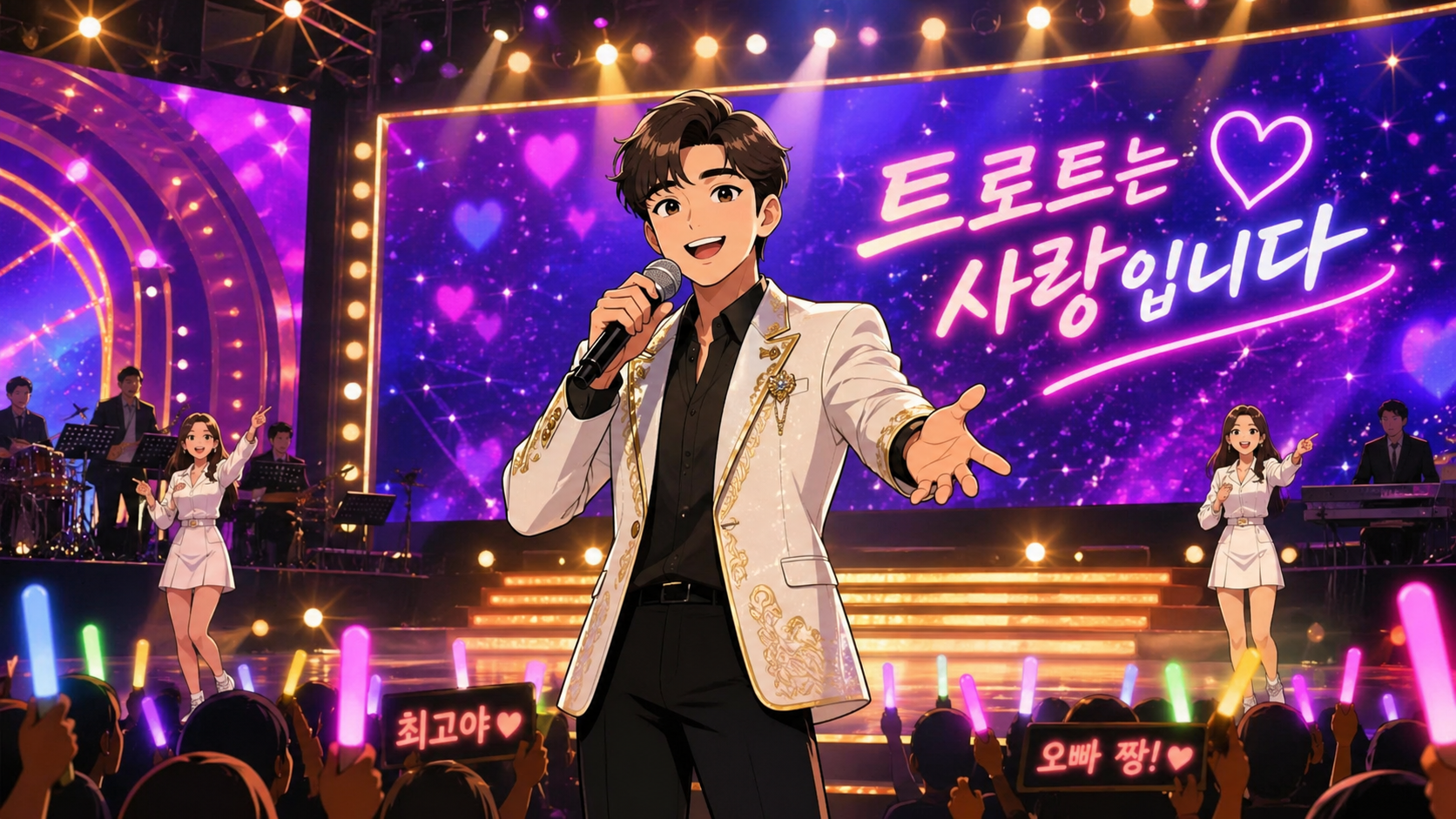
Coachella is one of the trendiest music festivals in the world. Performing trot, complete with its signature vocal bends and vibrato, without a single line of English lyrics and relying solely on Korean subtitles, might have seemed like a reckless gamble. But the result proved otherwise. The emotional essence of trot needs no explanation: the body reacts before the mind can process it. The core of Daesung’s boldness lay in presenting “the most Korean thing” with complete confidence, untranslated, unfiltered, and raw.
To view trot as a genre introduced from abroad during the Japanese colonial period is only half correct. The ornamental vocal inflections, the deliberate drops in tone to amplify emotion, and the coexistence of sorrow and excitement within a single breath: all of these elements existed in Korean musical expression long before Western rhythms arrived. When Western duple rhythms entered Korea during the colonial era, they merged with these pre-existing sensibilities, giving rise to trot. In this sense, trot and traditional folk music are closely related. The trembling voice of Lee Mi-ja and the distinctive vocal bends of Na Hoon-a stem from the same lineage as pansori vocalization and folk ornamentation—what might be called Korea’s “sonic DNA.”
For a long time, trot was labeled as “music for the older generation” or dismissed as outdated. The turning point came in the 2000s with Jang Yoon-jung’s hit “Omona,” and the landscape shifted dramatically with the success of Mr. Trot in 2020. With the rise of younger artists like Lim Young-woong, interest grew across audiences, from those in their teens to those in their thirties. Alongside Korea–Japan trot and enka exchange competitions, the “old-fashioned music” of trot began to be reinterpreted as “music with deep roots.”
Interestingly, many globally successful Korean artists carry traces of this “ppong” DNA. Jungkook’s voice reflects a distinctly Korean emotional inflection, while ballad singers such as Park Hyo-shin, Lee Sun-hee, and Yim Jae-beum also exhibit vocal techniques rooted in folk and trot traditions. Even PSY’s “Gangnam Style” carries the energetic groove of this sensibility. Though K-pop has actively absorbed Western genres, the underlying layer of Korean emotion remains intact.
Portugal’s Fado, Argentina’s Tango, and America’s Blues all convey the emotions of ordinary people—a mixture of sorrow and joy—and have built devoted global fanbases. Trot holds similar potential. There is, however, one crucial condition: it must not be diluted. Once it is overly refined to accommodate global tastes, it risks losing its identity. Like Fado’s refusal to abandon the Portuguese language, Daesung’s decision to perform trot with Korean subtitles was precisely the right choice.
What Daesung demonstrated at Coachella was ultimately “the most Korean thing.” And perhaps that, paradoxically, is what can become the most universal.

