
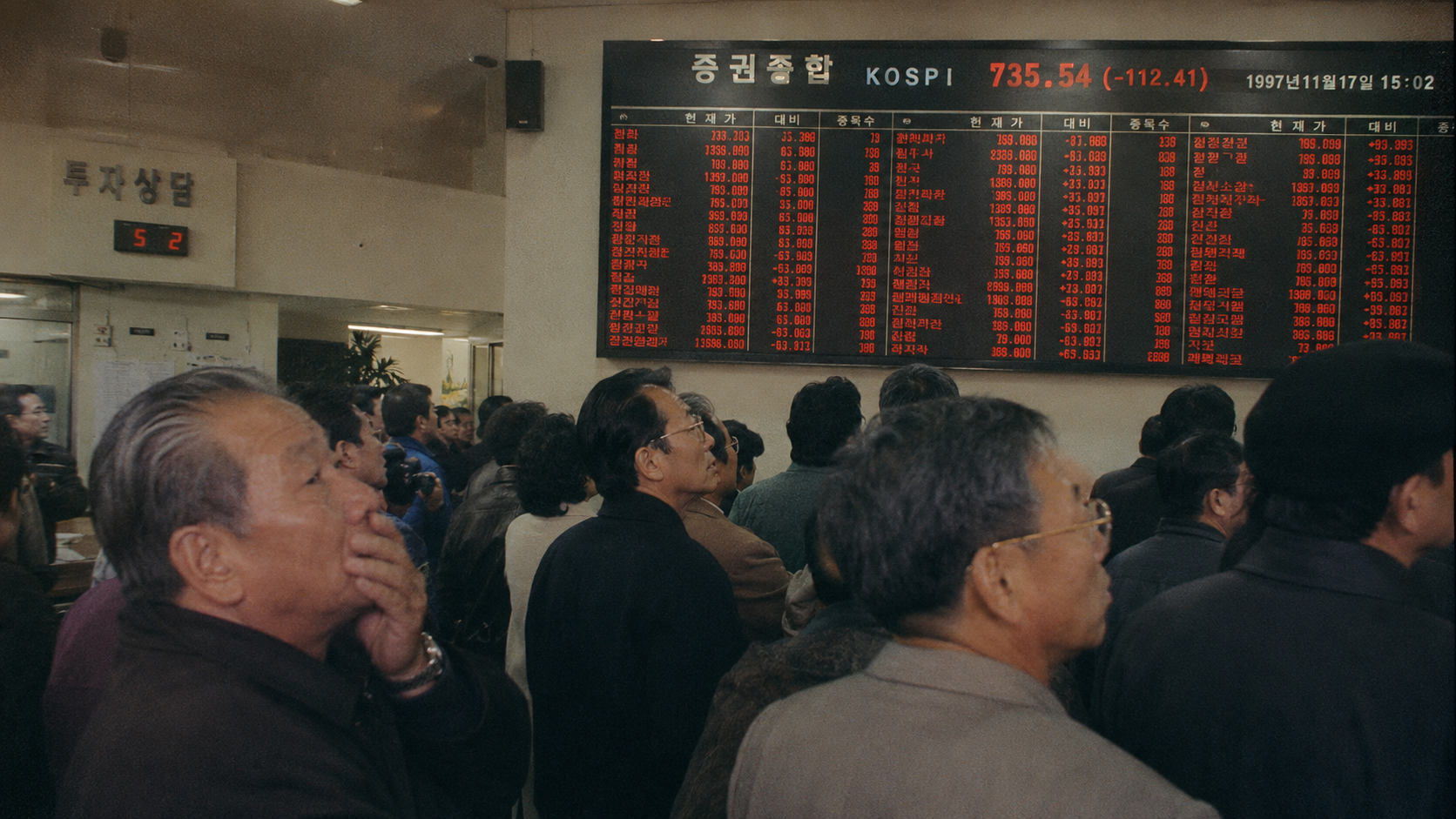
In the winter of 1997, Korea's benchmark index collapsed to the 300-point range. That was the year most Koreans first learned, through the evening news, that their country was on the brink of default. Stocks stopped being an asset and became a source of dread. Surviving companies were sold off to foreign capital at fire-sale prices, and the market opening demanded as a condition of the IMF bailout ended up, ironically, laying the foundation of today's Korean stock market. A handful of conglomerates emerged from the restructuring as absolute dominators of their industries — and at the top of that list sat Samsung Electronics.
1997년 겨울, 종합주가지수는 300선까지 주저앉았다. 국가가 부도 위기에 처했다는 사실을 국민 대부분이 뉴스로 처음 접했던 그해, 주식은 재산이 아니라 공포의 대상이었다. 살아남은 기업들은 외국인 자본에 헐값으로 넘어갔고, IMF 구제금융의 조건이었던 자본시장 개방은 역설적으로 오늘날 한국 증시의 골격을 만들었다. 재벌 구조조정을 거치며 몇몇 대기업이 각 산업의 절대 강자로 남았고, 그 정점에 삼성전자가 있었다.
단어장
기사 본문
이후 코스피는 '삼성전자가 곧 코스피'라는 말이 나올 만큼 단일 종목 의존도가 높은
시장으로 자리 잡았다. 여기에 개인투자자 특유의 몰빵 문화가 얹어졌다. 2020년 '동학개미운동'은 그 정서를 상징적으로 보여준 사건으로, 개인들은 외국인 매물을 받아내며 국내 대장주에 집중 베팅했고, 그
대상은 거의 항상 삼성전자 아니면 SK하이닉스였다.
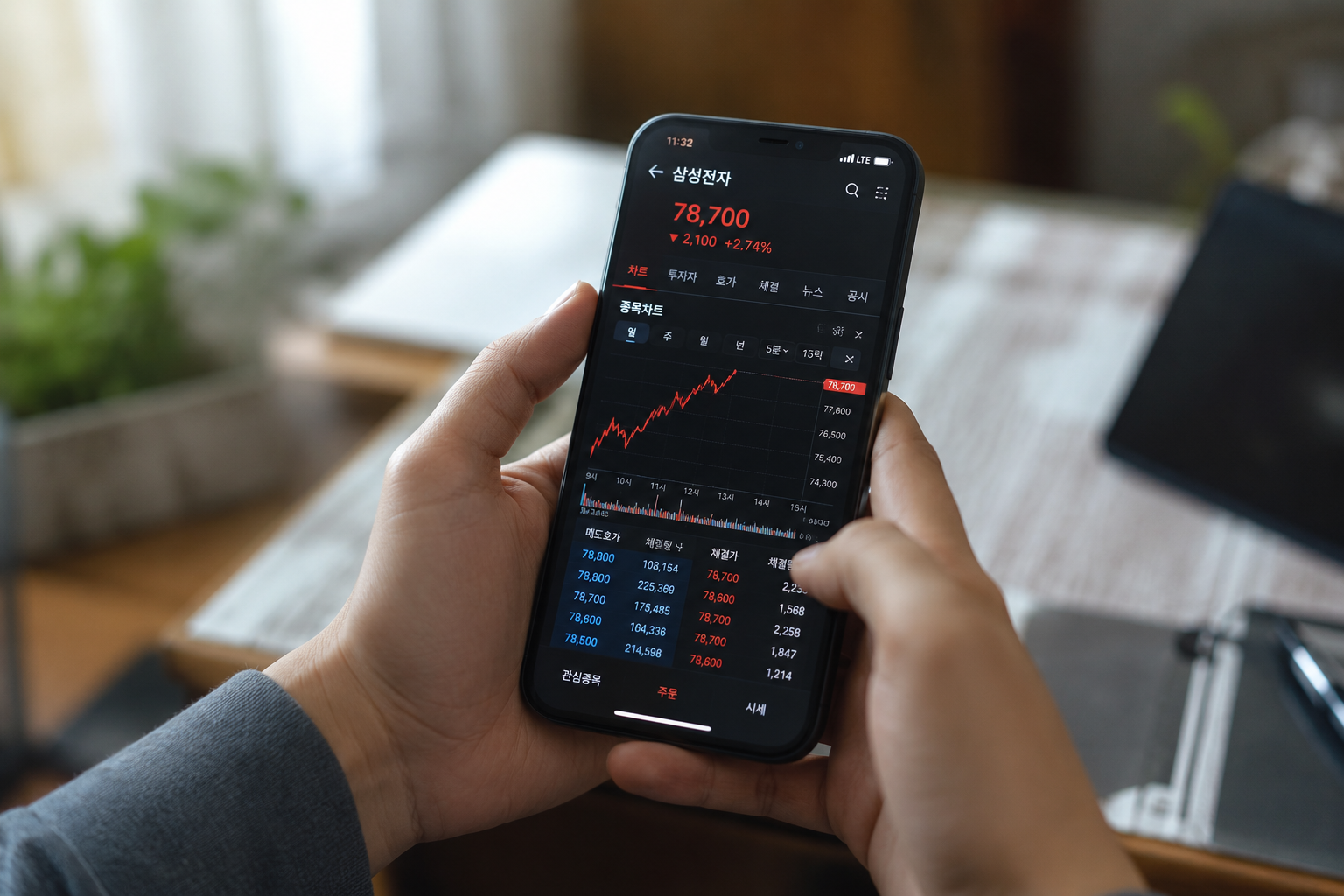
2026년 현재 이 쏠림은 사상 최고 수준에 이르렀다. 월스트리트저널에 따르면 삼성전자와 SK하이닉스의 코스피 내 합산 비중은 2년 전 약 40%에서 올해 60%까지 확대됐다. AI 반도체 수요 폭증과 HBM 경쟁력을 앞세운 SK하이닉스는 지난 6월 26년 만에 삼성전자를 제치고 시가총액 1위에 올라섰고, 두 회사 시총은 나란히 1조 달러를 넘겼다. 그러나 나스닥의 엔비디아·애플 비중이 20% 안팎, 니케이의 반도체·도요타 비중이 10% 미만인 것과 비교하면, 두 종목의 하루 주가가 지수 전체를 좌우하는 코스피의 구조는 세계적으로 이례적이다. 실제로 올해 MSCI 한국지수가 하루 5% 넘게 출렁인 날이 전체 거래일의 5분의 1에 달했다.
이런 쏠림은 지배구조 불투명성과 낮은 주주환원으로 오랫동안 저평가받아 온 '코리아 디스카운트' 문제와 맞물려 있다. 반도체 슈퍼사이클이 그 저평가를 일시적으로 지워버렸을 뿐, 근본적 체질이 바뀐 것은 아니라는 지적이 나온다. 개인 신용거래와 단일 종목 레버리지 ETF에 자금이 몰리는 현상도 변동성을 키우는 요인이다.
앞으로의 한국 증시는 두 갈래 길에 서 있다. 반도체 실적 확대와 SK하이닉스 ADR 상장이 성사되며 만성적 저평가가 구조적으로 해소되는 시나리오, 또는 AI 투자 열풍이 꺾이거나 두 대장주 중 하나에서 실적 쇼크가 날 경우 지수 전체가 동반 급락하는 시나리오다. 결국 한국 증시의 미래는 반도체 산업의 미래와 거의 등가로 묶여 있으며, 이 사실 자체가 오늘날 한국 주식시장의 가장 뚜렷한 특성이자 가장 큰 리스크다.
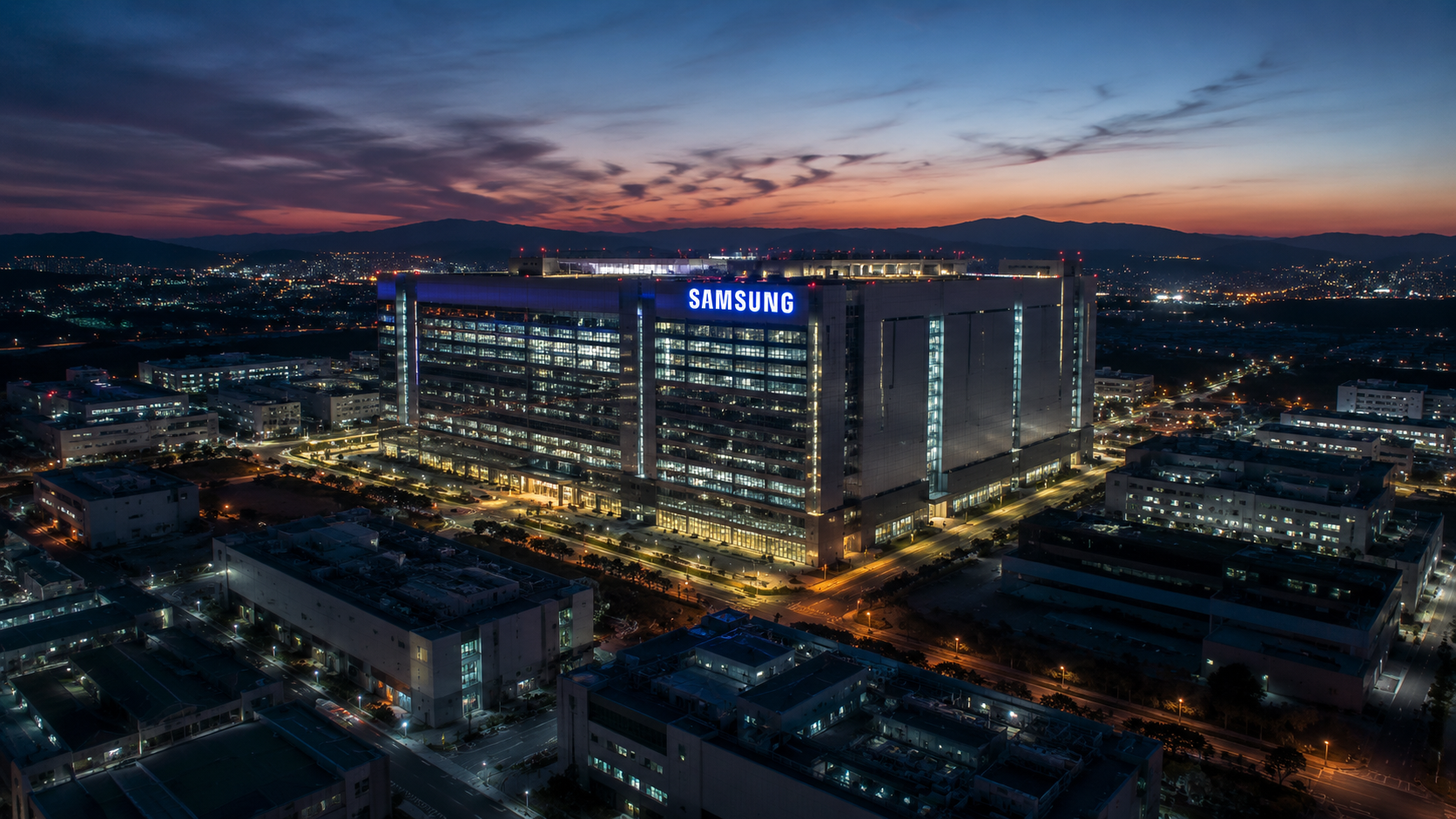
From then on, the KOSPI became a market so dependent on a single
stock that people joked, "Samsung Electronics is the KOSPI." Layered
on top of that was Korean retail investors' distinctive all-in culture. The
2020 "Ant Army" movement — when individual investors absorbed the
shares foreigners were dumping during the pandemic sell-off — captured that
mindset perfectly. And the target of that concentrated betting was almost
always one of two names: Samsung Electronics or SK Hynix.
That concentration has now hit an all-time high. According to the Wall Street Journal, the combined weight of Samsung Electronics and SK Hynix in the KOSPI has expanded from roughly 40% two years ago to a record 60% this year. Riding surging AI chip demand and its lead in high-bandwidth memory (HBM), SK Hynix overtook Samsung Electronics in market capitalization this past June for the first time in 26 years, and both companies' valuations have crossed the trillion-dollar mark. But compare that to Nvidia and Apple's roughly 20% combined weight on the Nasdaq, or the under-10% share that chipmakers and Toyota hold in Japan's Nikkei — and Korea's structure, where a single day's move in two stocks can swing the entire index, starts to look like a global outlier. This year alone, the MSCI Korea Index has swung more than 5% in a single day on nearly one out of every five trading days.
This concentration is tangled up with the long-standing "Korea Discount" — the market's chronic undervaluation, rooted in opaque governance and weak shareholder returns. The semiconductor supercycle has temporarily papered over that discount, but analysts caution the underlying structure hasn't actually changed. Heavy margin trading and money flooding into single-stock leveraged ETFs are only adding fuel to the volatility.
From here, Korea's market faces two very different paths. One is a scenario where booming chip earnings and a successful SK Hynix Nasdaq ADR listing finally resolve that chronic undervaluation for good. The other is a scenario where the AI investment boom cools, or either giant posts an earnings shock, and the whole index tumbles in tandem, exposing just how fragile the structure really is. In the end, the future of the Korean stock market is bound almost one-to-one to the future of its semiconductor industry — and that dependency is both the market's defining trait and its single biggest risk.

