
Pajeon on a rainy day, a midday snack shared between farm chores, a table set for an old friend. Nearby, there was always a bowl of milky-white makgeolli. Nutty, tangy, and gently sweet, this traditional rice wine holds both the everyday life of the Korean people and the character of each region.
비 오는 날의 파전, 농사일 틈틈이 나누던 새참, 오랜 벗과 마주 앉은 술상. 그 곁에는 늘 뽀얀 막걸리 한 사발이 있었다. 구수함과 산미, 은근한 단맛이 어우러진 이 술에는 한국인의 생활과 지역의 개성이 고스란히 담겨 있다.
단어장
기사 본문
막걸리라는 이름은 술을 '막 걸러 냈다'는 데서 비롯되었다고 전해진다. 그 뿌리는 곡식을 발효시켜 빚던 오랜 탁주 문화에 닿아 있다. 고려 시대 문헌에도 탁주에 관한 기록이 등장하며, 조선 시대에는 농사일 중에 마시는 농주로서 서민의 삶에 깊이 자리 잡았다. 집집마다 술을 빚던 가양주 문화는 일제강점기의 주세 제도와 면허 제도를 거치며 크게 위축되었다. 광복 이후에는 식량 부족으로 쌀을 이용한 양조가 제한되면서, 밀과 보리로 빚은 막걸리가 널리 퍼지기도 했다.
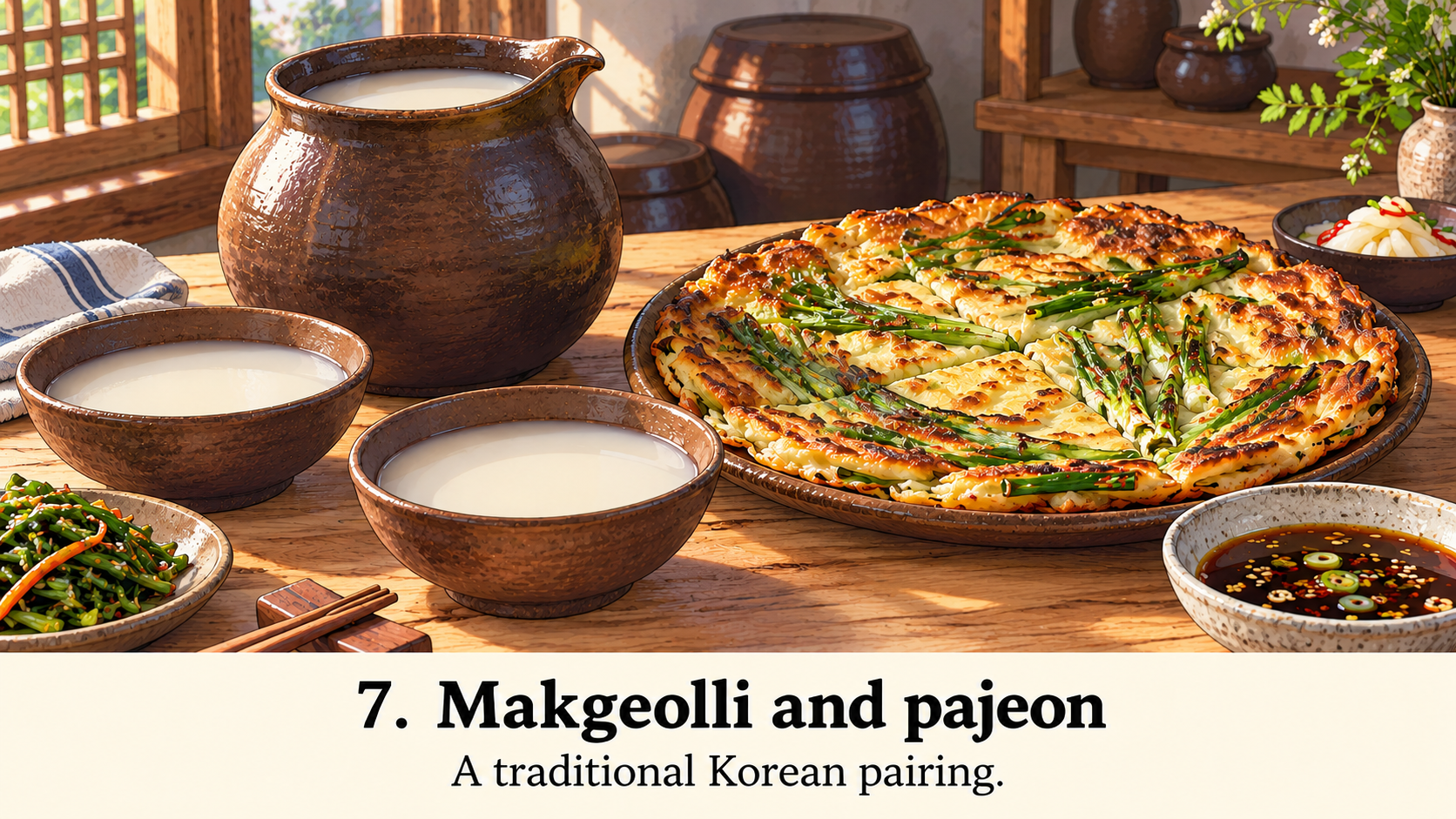
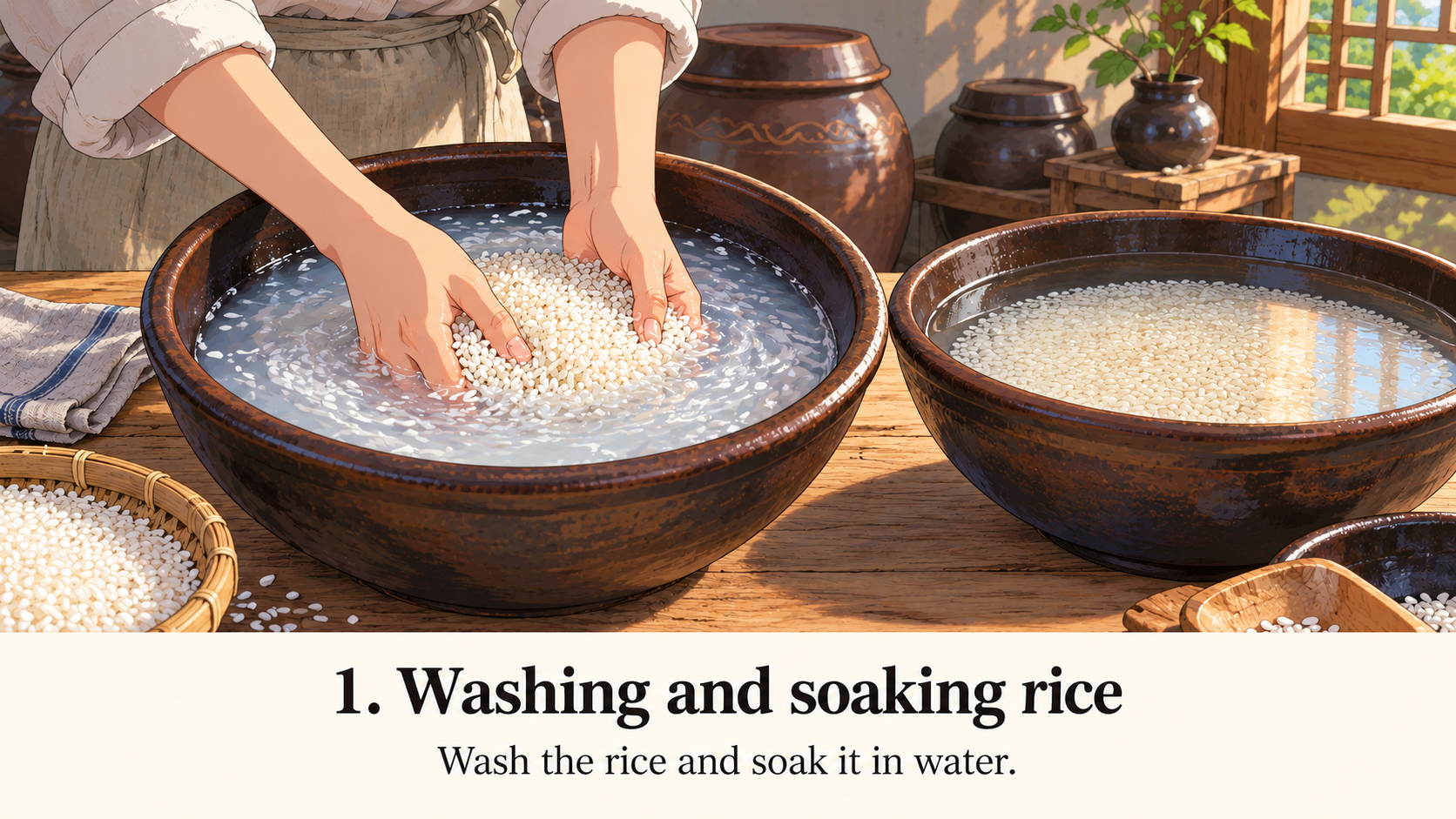
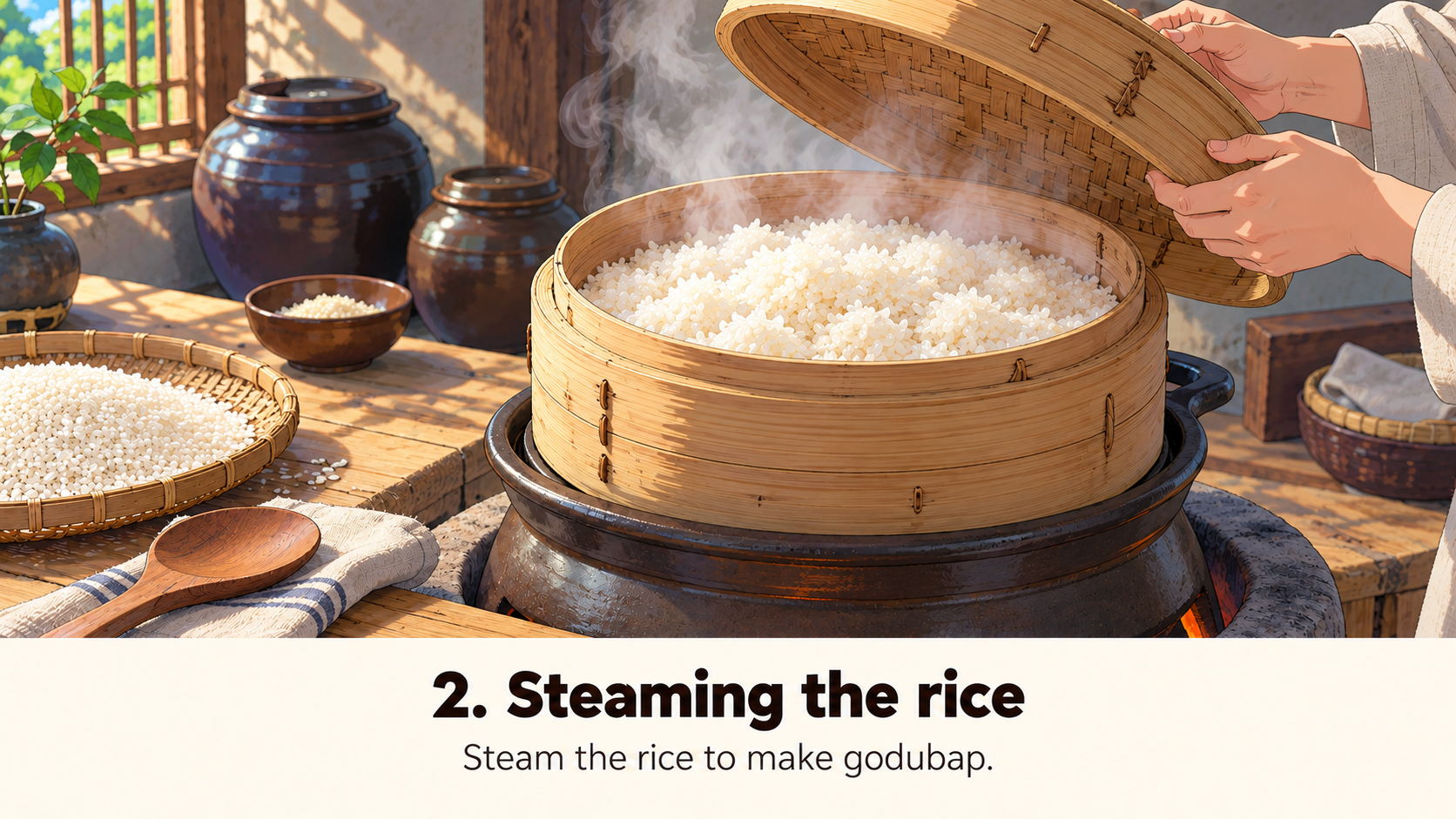
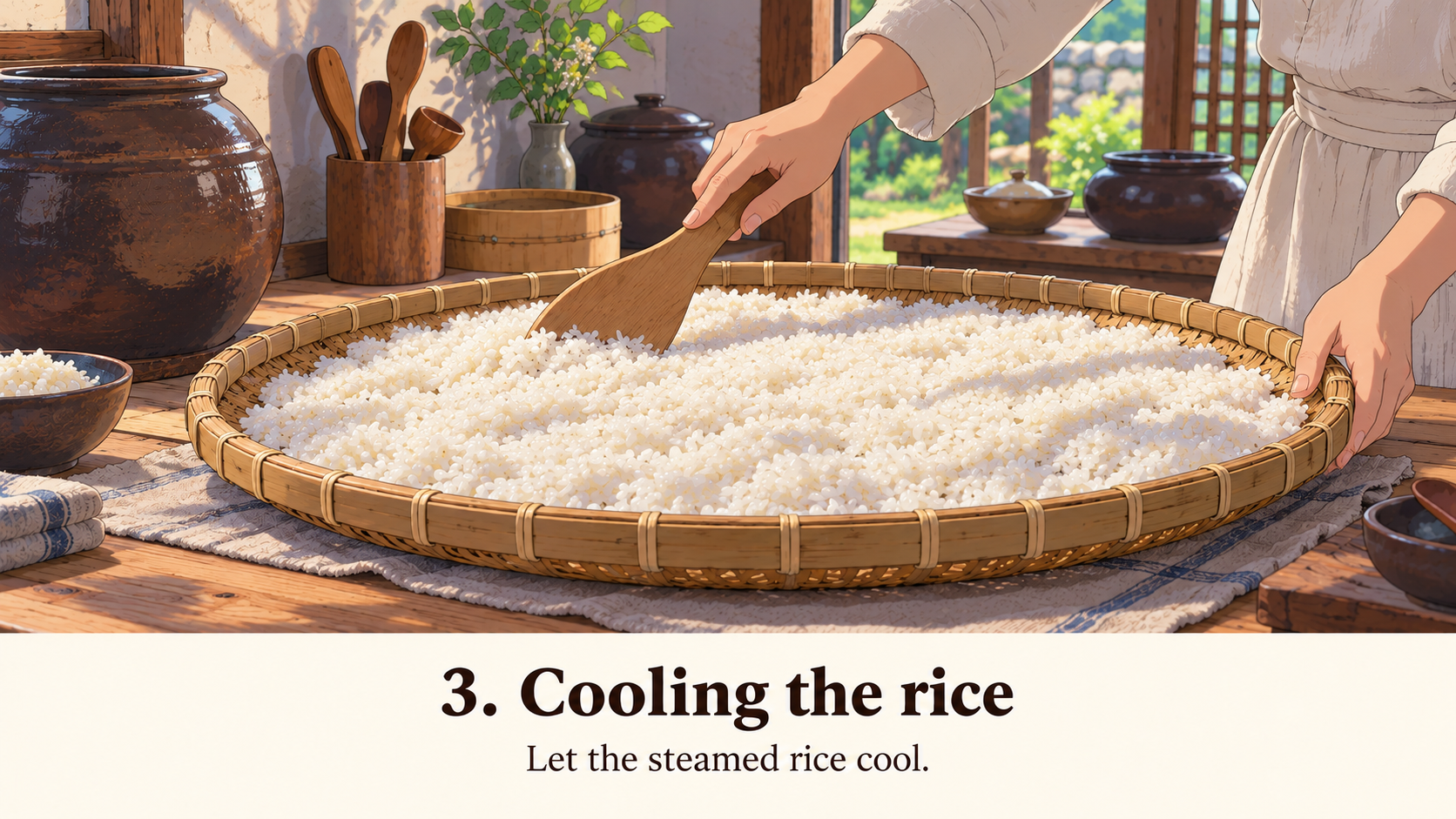
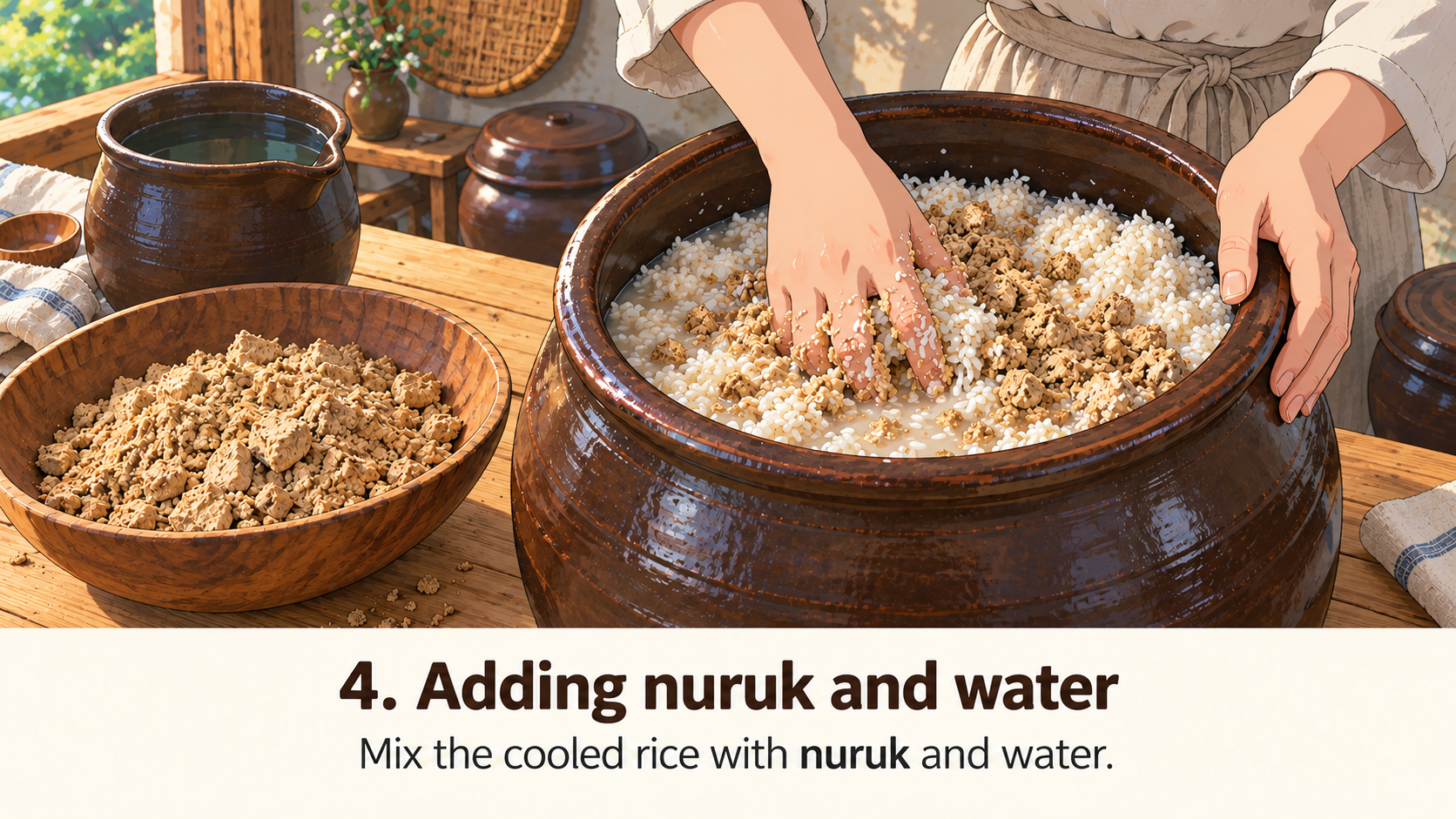
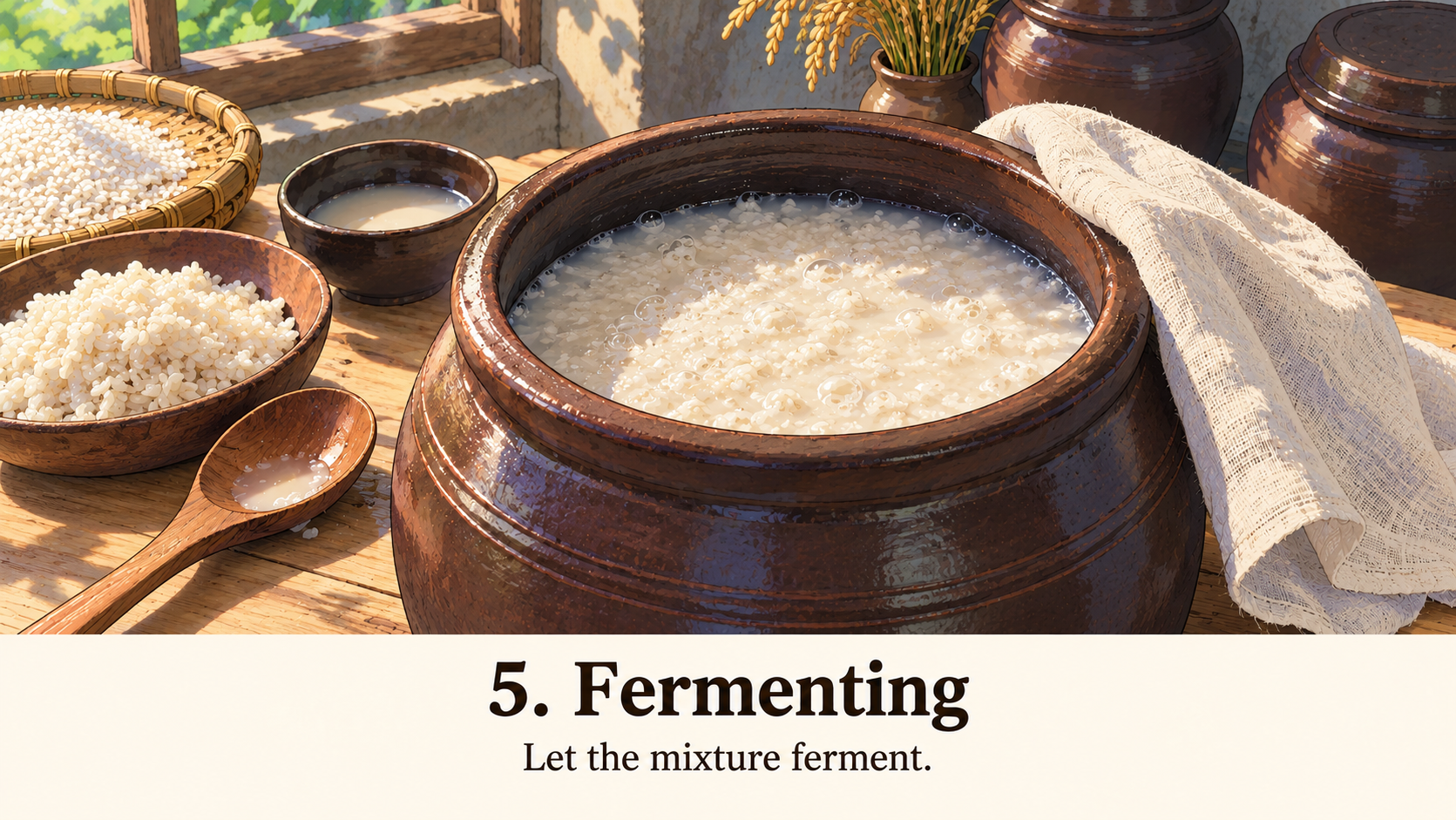
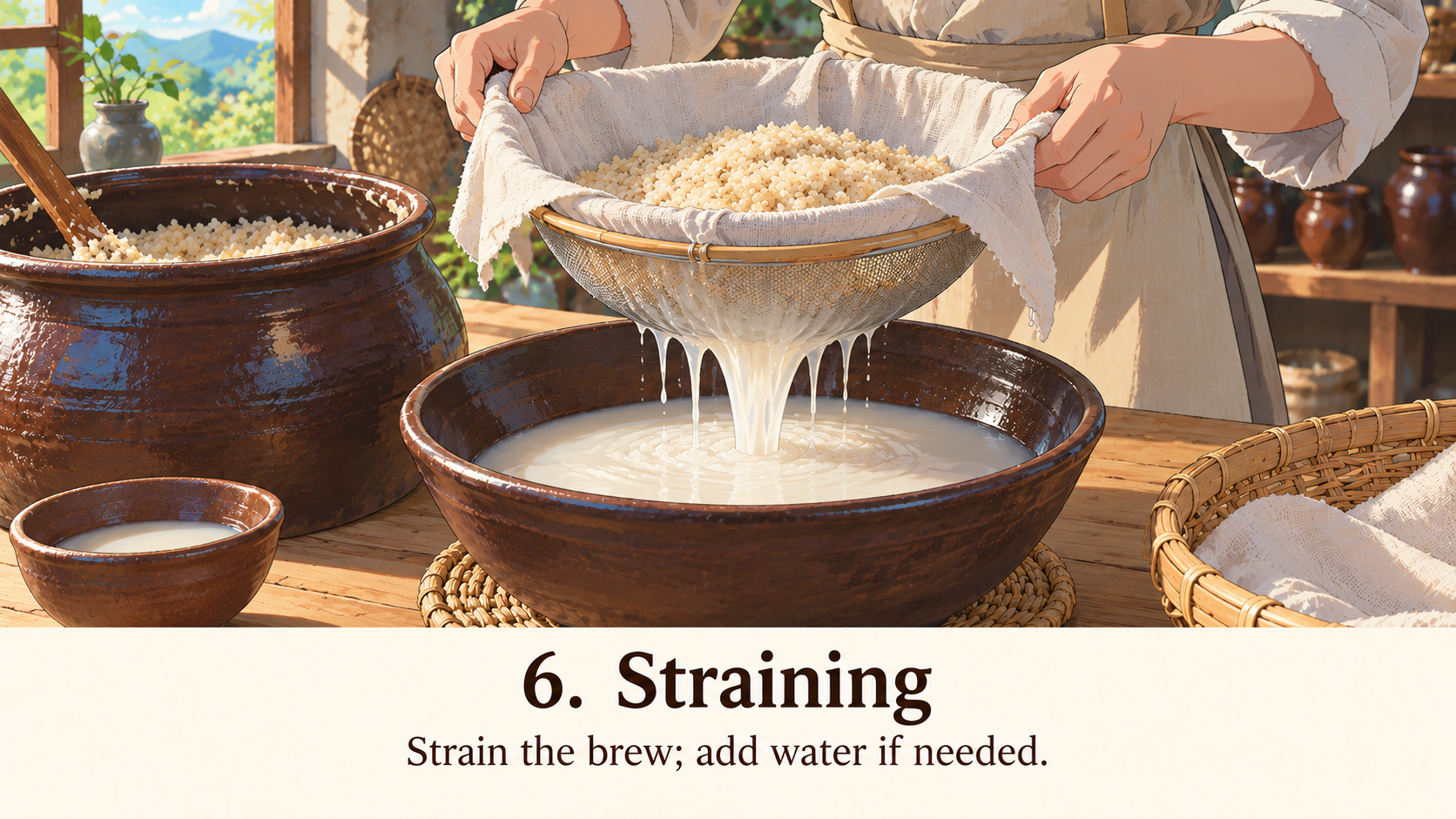
막걸리의 기본 재료는 곡식과 누룩, 그리고 물이다. 쌀을 씻어 불린 뒤 고두밥을 짓고, 이를 식혀 누룩과 물을 섞는다. 누룩 속 효소가 전분을 당으로 분해하고, 효모가 그 당을 알코올로 바꾸면서 술이 익어 간다. 발효를 마친 술을 걸러 낸 뒤, 필요에 따라 물을 더해 농도와 도수를 맞춘다. 재료의 배합과 발효 조건에 따라 맛이 달라지기에, 같은 막걸리라도 양조장마다 저마다의 향과 질감을 지닌다.
전국의 막걸리를 맛보는 일은 작은 지역 여행과도 같다. 서울의 장수막걸리, 경기도 포천의 이동막걸리와 양평의 지평막걸리는 누구에게나 친숙한 이름이다. 강원도에서는 평창의 메밀막걸리, 정선의 아우라지옥수수막걸리처럼 지역 곡물을 살린 술을 만날 수 있다. 부산의 산성막걸리와 울산의 복순도가, 전라도 해남의 해창막걸리와 정읍의 송명섭막걸리도 저마다 다른 매력을 뽐낸다. 충청도에는 당진의 백련막걸리와 공주의 알밤막걸리가 있고, 제주에는 척박한 화산섬에서 좁쌀로 술을 빚던 전통을 잇는 막걸리가 있다.
막걸리를 그저 값싸고 익숙한 술로만 기억하기에는 그 안에 담긴 이야기가 무척 풍성하다. 한 사발을 천천히 음미하다 보면 곡물의 향과 발효의 깊이 너머로, 술을 빚고 나누며 살아온 사람들의 시간이 느껴진다.
The name makgeolli is said to come from the idea of liquor that has been “roughly strained.” Its roots reach back to the ancient tradition of takju, a cloudy wine brewed by fermenting grain. Records of takju appear in texts from the Goryeo dynasty, and by the Joseon era it had become a fixture of ordinary people’s lives as nongju, the “farmer’s wine” drunk during long days in the fields. The tradition of gayangju, home-brewed liquor made in nearly every household, declined sharply under the liquor taxes and licensing systems introduced during the Japanese colonial period. After liberation, food shortages led to restrictions on brewing with rice, and makgeolli made from wheat and barley became widespread.
Makgeolli’s basic ingredients are grain, nuruk (a traditional Korean fermentation starter), and water. Rice is washed, soaked, and steamed into godubap, a firm, dry rice, which is then cooled and mixed with nuruk and water. Enzymes in the nuruk break starch down into sugar, and yeast turns that sugar into alcohol as the brew slowly matures. Once fermentation is complete, the liquid is strained, and water may be added to adjust its body and strength. Because the flavor shifts with ingredient ratios and fermentation conditions, every brewery’s makgeolli has its own distinct aroma and texture.
Tasting makgeolli from across the country is like taking a small journey through Korea’s regions. Seoul’s Jangsu Makgeolli, along with Pocheon’s Idong Makgeolli and Yangpyeong’s Jipyeong Makgeolli in Gyeonggi Province, are household names. In Gangwon Province, you’ll find brews that showcase local grains, such as Pyeongchang’s buckwheat makgeolli and Jeongseon’s Auraji corn makgeolli. Busan’s Sanseong Makgeolli, Ulsan’s Boksoondoga, and, in Jeolla Province, Haenam’s Haechang Makgeolli and Jeongeup’s Song Myeong-seop Makgeolli each have a charm all their own. Chungcheong Province offers Dangjin’s Baekryeon Makgeolli and Gongju’s chestnut makgeolli, while Jeju is home to makgeolli that carries on the island’s tradition of brewing with millet on its rugged volcanic land.
Makgeolli has far too many stories to be remembered simply as a cheap, familiar drink. Savor a bowl slowly, and beyond the aroma of grain and the depth of fermentation, you can sense the lives of the people who brewed it, shared it, and lived alongside it.

