
To Koreans, "IMF" isn't just the name of an international organization. It's the name of an era. Ask almost any Korean family about it and you'll hear something like, "Things were really hard for us during the IMF." On November 21, 1997, the Korean government asked the International Monetary Fund for an emergency loan — and from that day on, Korean society changed in ways that are still felt today.
한국 사람들에게 "IMF"는 단순히 국제기구의 이름이 아니다. 한 시대를 뜻하는 말이다. "IMF 때 우리 집이 힘들었다"는 이야기는 한국에서 쉽게 들을 수 있다. 1997년 11월 21일, 한국 정부는 IMF에 급하게 돈을 빌려 달라고 요청했다. 그날 이후 한국 사회는 크게 달라졌다.
단어장
기사 본문
1990년대 중반 한국 경제는 빠르게 성장하고 있었다. 1996년에는 선진국 모임인 OECD에도 가입했다. 그런데 기업들은 외국에서 빌린 단기 자금으로 무리하게 사업을 늘렸고, 은행들도 위험을 제대로 관리하지 못했다. 1997년에 한보, 기아자동차 같은 큰 회사들이 연달아 부도가 나자 외국 투자자들은 한국에서 돈을 빠르게 빼 갔다. 동남아시아에서 시작된 금융위기도 한국으로 번졌다.
결국 나라에 달러가 거의 남지 않게 되었다. 1997년 12월에는 외환보유액이 39억 달러까지 줄어들었는데, 갚아야 할 나라 빚은 훨씬 많았다. 이것이 바로 외환위기다. 한국은 IMF에서 210억 달러의 구제금융을 승인받았지만, 그 대신 IMF가 요구하는 강도 높은 개혁을 따라야 했다. 달러 환율은 2,000원을 넘었고, 금리는 30%를 넘기도 했다.
많은 사람들이 고통을 겪었다. 회사들이 문을 닫거나 구조조정을 하면서 일자리를 잃는 사람이 늘었기 때문에, 1997년 2.6%였던 실업률은 1998년 7.0%로 올랐다. 가족에게 알리지 못해 양복을 입고 출근하는 척하는 실업자 아버지들의 이야기도 있다. 1998년 경제성장률은 약 -5%로, 한국이 겪은 가장 나쁜 기록 가운데 하나였다.
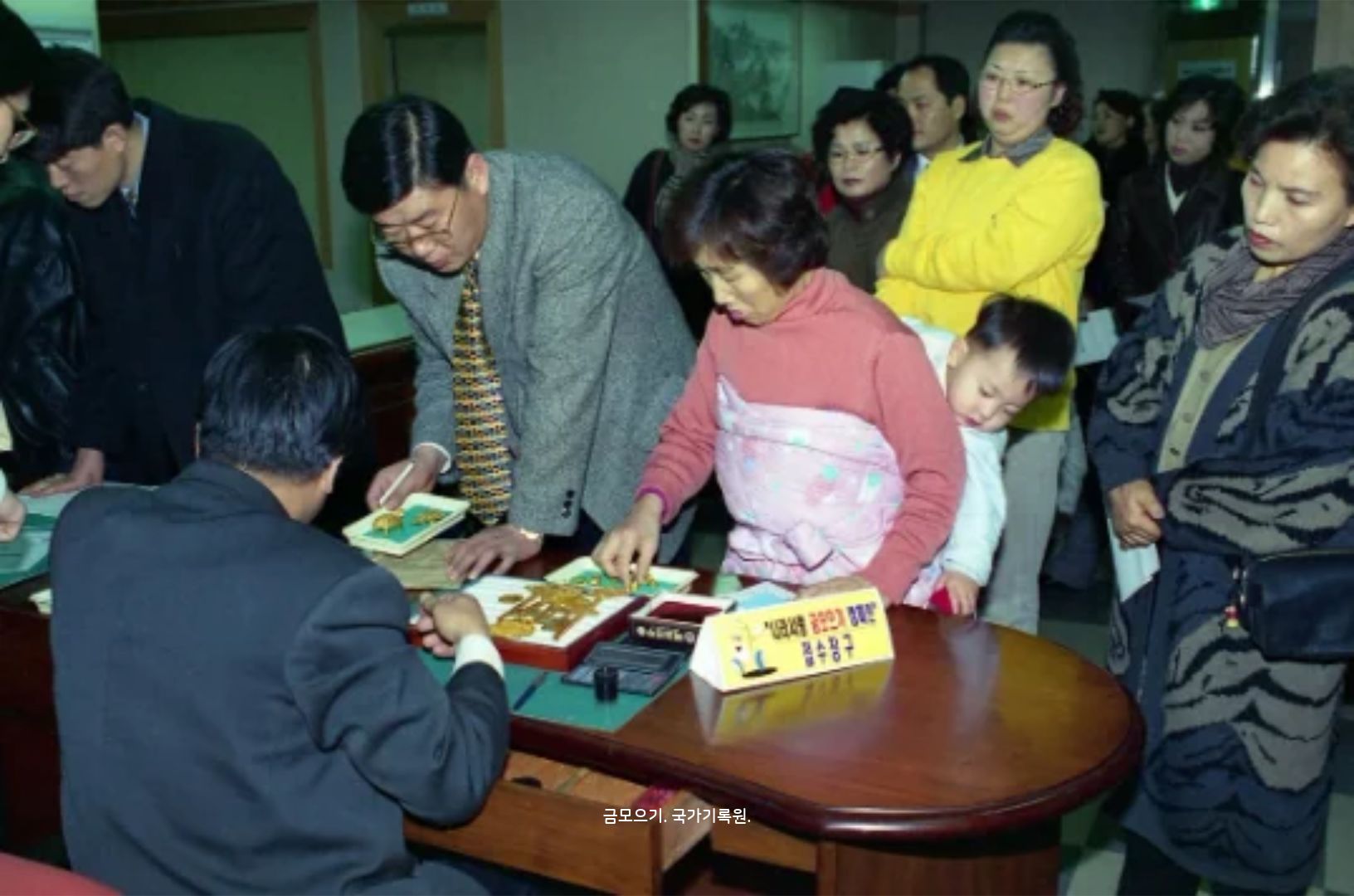
그때 국민들은 놀라운 일을 했다. 집에 있던 결혼반지, 아이 돌반지, 금메달을 나라를 위해 내놓은 것이다. 이것이 금모으기 운동이다. 약 351만 명이 참여해 227톤의 금을 모았고, 그 가치는 약 20억 달러였다. 김수환 추기경도 자신의 금십자가를 내놓았다. "아껴 쓰고, 나눠 쓰고, 바꿔 쓰고, 다시 쓰자"는 '아나바다' 운동도 널리 퍼졌다.
정부와 기업도 힘든 개혁을 이어 갔다. 부실한 은행과 기업을 정리하고, 외국 투자에 시장을 크게 열었다. 그 결과 한국은 IMF에서 빌린 195억 달러를 2001년 8월에 모두 갚았는데, 이는 예정보다 약 3년이나 빠른 것이었다.
하지만 IMF는 한국 사회에 깊은 흔적을 남겼다. "한 회사에서 평생 일한다"는 '평생직장' 생각이 사라졌고, 1998년에는 정리해고와 파견 근로가 법으로 허용되었다. 그래서 비정규직이 늘고 빈부 격차도 커졌다는 평가가 많다. 안정적인 공무원이 젊은이들의 인기 직업이 된 것도 이때부터다. 이 시기의 분위기는 드라마 '응답하라 1994'에도 잘 그려져 있다.
그러나 이 위기는 한국을 더 강하게 만든 계기이기도 했다. 기업들은 빚에 기대던 무리한 확장을 멈추고 수익과 투명성을 중요하게 여기기 시작했고, 정부는 다시는 달러가 바닥나지 않도록 외환보유액을 크게 늘렸다. 사람들의 생각도 완전히 바뀌었다. 회사가 나를 끝까지 지켜 주지 않는다는 것을 깨닫게 되면서, 많은 사람들이 외국어와 자격증을 공부하며 스스로 실력을 키우기 시작한 것이다. 위기를 함께 이겨 낸 경험은 "어려움이 와도 다시 일어설 수 있다"는 자신감으로 남았고, 2008년 세계 금융위기 때 한국 경제가 비교적 빠르게 회복할 수 있었던 바탕이 되었다는 평가도 많다. 오늘날 한국 사회의 높은 경쟁력과 위기에 강한 체질은 바로 1997년의 겨울에서 시작되었다고 할 수 있다.
In the mid-1990s, South Korea was one of the world's fastest-growing economies. In 1996, it even joined the OECD, the club of advanced economies. But behind the success, big companies had borrowed huge amounts of short-term money from abroad to expand too quickly, and banks weren't checking the risks. In 1997, major firms like Hanbo Steel and Kia Motors went bankrupt (부도) one after another. Foreign investors panicked and pulled their money out, while a financial crisis that started in Southeast Asia spread to Korea.
Soon, the country was running out of dollars. By December 1997, Korea's foreign currency reserves had fallen to just $3.9 billion — far too little to pay its foreign debts. This was the foreign exchange crisis (외환위기). The IMF approved a $21 billion bailout (구제금융), part of a record international rescue package of about $58 billion. But it came with tough conditions. The won crashed past 2,000 to the dollar, and interest rates topped 30%.
Ordinary people paid the price. As companies closed or went through restructuring (구조조정), unemployment jumped from 2.6% in 1997 to 7.0% in 1998. Stories spread of jobless (실업자) fathers who still put on a suit every morning so their families wouldn't know. Korea's economy shrank by about 5% in 1998 — one of the worst results in its modern history.
Then something remarkable happened. Millions of Koreans brought their own gold to banks — wedding rings, babies' first-birthday rings, sports medals — and donated or sold it to help the country earn dollars. This was the Gold Collection Campaign (금모으기 운동). About 3.51 million people took part and gathered 227 tons of gold, worth around $2 billion. Even Cardinal Stephen Kim Sou-hwan gave up his gold cross. People also joined the "Anabada" movement: save it, share it, swap it, reuse it.
The government and businesses pushed through painful reforms: closing weak banks and companies and opening the market to foreign investment. In the end, Korea repaid the $19.5 billion it had borrowed from the IMF in August 2001 — nearly three years ahead of schedule.
But the crisis left deep marks. The idea of a "job for life" disappeared. In 1998, layoffs and temporary agency work were legalized, and many experts say irregular jobs and the gap between rich and poor grew from this point. It's also why stable government jobs became so popular among young Koreans. The drama Reply 1994 captures the mood of those days well.
Yet the crisis also became the moment Korea grew stronger. Companies stopped expanding recklessly on borrowed money and began to value profits and transparency, while the government built up huge foreign currency reserves so the country would never run out of dollars again. Most of all, people's mindset changed completely. Once Koreans realized that no company would protect them forever, many started investing in themselves — studying foreign languages, earning certificates, and sharpening their skills. The experience of overcoming the crisis together left a lasting confidence that "we can always get back up," and many say it helped Korea bounce back relatively quickly from the 2008 global financial crisis. In many ways, the competitive, crisis-resistant Korea of today began in that winter of 1997.

