
No idol group. No giant agency. No army of fans streaming on repeat. Just a quiet rock ballad asking listeners whether they grew up to be the adult they once dreamed of, and it climbed to the top of the chart that K-pop's biggest names fight hardest to win. Thousands of listeners say the song made them cry. The voice they cried to doesn't belong to any human being. Now Korea's music world is facing an old question in a new form: who actually makes a song?
아이돌 그룹도, 대형 기획사도, 거대한 팬덤도 없었다. 어른이 된 자신에게 조용히 안부를 묻는 록 발라드 한 곡이 한국에서 가장 들어가기 어렵다는 음원 차트의 정상에 올랐다. 많은 청취자가 눈물을 흘렸다고 고백한 그 목소리는 사람의 것이 아니었다. 이 사건은 한국 가요계에 오래된 질문을 다시 던졌다. 노래는 과연 누가 만드는 것인가.
단어장
기사 본문
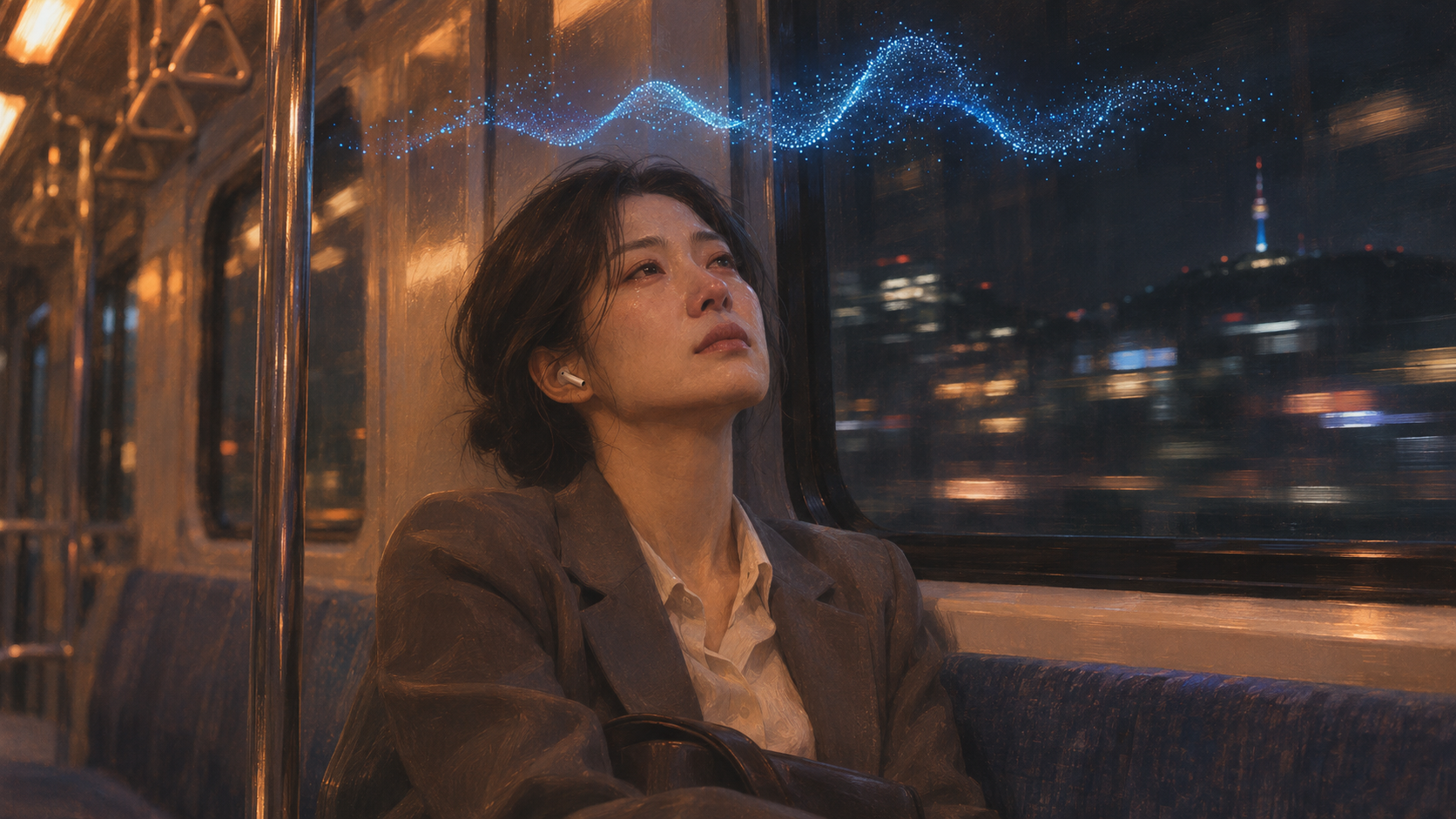
11월 13일, 아티스트 '머무르'의 「꿈꾸던 어른이 되었나요?」가 국내 최대 음원 플랫폼 멜론의 ‘TOP100’ 차트 1위에 올랐다. 목소리를 생성형 AI로 만든 노래가 이 차트에서 1위를 차지한 것은 이번이 처음이다. 머무르는 두 작곡가가 만든 AI 음악 프로젝트로, 기획과 가사는 사람이 맡고 목소리와 멜로디의 상당 부분은 음악 생성 AI가 만들었다. 지난 6월에 나온 이 노래는 숏폼 영상의 배경음악으로 퍼지며 조금씩 순위를 올렸고, 아이돌들의 신곡을 제치고 일주일 넘게 정상을 지켰다. 청취자의 3분의 2는 30·40대였다.
반응은 엇갈렸다. 한쪽에서는 노래에 달린 수많은 댓글에 주목했다. 투병과 생계, 고된 직장 생활을 버티는 사람들의 고백이 이어지면서, 일자리를 빼앗을 것이라던 AI가 오히려 지친 어른들을 위로한다는 역설이 화제가 됐다. 다른 쪽에서는 제도가 기술을 따라가지 못하는 현실을 짚었다. 이 노래는 음악 저작권 단체에 등록되지 않아 제작자가 작곡 부문의 저작권료를 받지 못한다. 사람의 창작적 기여가 있는 AI 활용 곡을 받아 주는 기준이 한때 나왔지만, 사회적 합의가 먼저라는 목소리에 밀려 얼마 못 가 철회됐다. 결국 논쟁은 누구를 창작자로 볼 것인가, AI는 누구의 음악을 배웠는가라는 두 질문으로 모인다. 가수와 연주자 같은 실연자들은 설 자리가 줄어든다고 걱정하고, 음반 업계는 허락 없는 무단 학습에 반대한다. 반면 이미 모든 분야에서 AI를 쓰는 시대에 음악만 막을 수는 없으니 AI 음악을 가려내는 분명한 기준부터 만들자는 의견도 많다. 해외에서도 100% AI 곡의 업로드를 막는 스트리밍 서비스가 나오는 등 선 긋기가 시작됐다. 전면 금지를 주장하는 목소리는 드물다. 핵심은 어디에 선을 긋고 누가 대가를 받느냐다.
그렇다면 왜 하필 한국에서 이런 일이 가장 먼저 벌어졌을까. 한국은 이미 가상 아이돌에 익숙한 시장이다. 실제 사람의 목소리와 움직임을 가상 캐릭터에 입힌 ‘플레이브(PLAVE)’는 큰 인기를 얻었고, 올해 데뷔한 아이돌형 그룹 네 팀 가운데 한 팀꼴이 가상 아티스트였다. 이제는 사람이 연기하지 않는 생성형 AI 아이돌도 활동을 시작했다. 다른 한편으로는 노래가 건드린 정서가 있다. 대학, 취업, 내 집 마련까지 남들보다 늦지 않아야 한다는 압박이 강한 사회에서 “어릴 적 꿈꾸던 어른이 되었느냐”는 질문은 많은 사람에게 아픈 데를 건드리는 물음이다. 누가 불렀든 사람들이 그 노래에서 공감을 찾았다는 사실은 달라지지 않는다.
이 노래는 한국어 공부에도 좋은 재료가 된다. 제목의 ‘꿈꾸던’에는 과거에 계속되던 일을 떠올리는 어미 ‘-던’이 들어 있다. 멜론이나 유튜브에서 노래를 들으며 가사를 소리 내어 읽어 보고, ‘-던’을 넣어 ‘내가 꿈꾸던 일’을 한 문장으로 써 보자. 그리고 한 가지를 더 생각해 보자. 너무 자연스러워 사람의 것처럼 들리는 이 목소리를, 우리는 앞으로 어떻게 들어야 할까.
On November 13, "Did You Become the Adult You Dreamed Of?" ("꿈꾸던 어른이 되었나요?") by an act called MEOMURU (머무르) reached No. 1 on the Top 100 chart of Melon, Korea's largest music streaming platform. It was the first time a song with a voice made by generative AI (생성형 AI) had reached the top of that chart. MEOMURU is an AI music project created by two songwriters. Humans planned the song and wrote the lyrics, while a music AI generated the vocals and much of the melody. The song came out in June and spread slowly as background music for short-form videos. In mid-November it pushed past new releases from idol groups and held the top spot (정상) for more than a week. About two-thirds of its listeners were in their 30s and 40s.
Reactions have been split. Some people focused on the thousands of comments under the music video, many of them personal stories from people "holding on" through illness, money worries and hard jobs. They saw an irony: AI, once feared as a job killer, is now comforting tired adults. Others pointed out that the rules have not kept up. Because the song is not registered with Korea's music copyright society, its creators receive no copyright (저작권) royalties for the composition. A rule that would have accepted AI-assisted songs with real human creative contribution (기여) appeared briefly this year, but it was soon withdrawn (철회) amid calls for public discussion first. In the end, the debate comes down to two questions: who counts as a creator, and whose music did the AI learn from? Performers (실연자), the singers and players whose work trains these systems, worry about losing their place, and record labels oppose unauthorized (무단) training on their music. On the other side, many argue that in an age when AI is used in almost every field, music can't simply be walled off, and that clear standards for identifying AI music are the realistic first step. Abroad, some streaming services have started blocking fully AI-generated tracks. Few people are calling for a total ban. The real argument is about where to draw the line, and who gets paid.
Why did this happen in Korea first? Part of the answer is that Korean fans already know virtual stars well. The virtual idol group PLAVE, whose animated members are voiced and performed by real people, has become hugely popular, and roughly one in four idol-style groups that debuted this year were virtual artists. Now groups with no human performers at all have started releasing content. The other part of the answer is the feeling the song speaks to. In a society where many people feel pressure to stay on schedule (good university, good job, a home of your own), the question "Did you become the adult you dreamed of?" hits a sore spot. Whoever, or whatever, sang it, listeners found real empathy (공감) in it.
That also makes the song a great Korean study tool. Look at the title word 꿈꾸던 (kkumkkudeon, "that I used to dream of"). The ending -던 recalls something that went on in the past, like 자주 가던 카페 ("the café I used to go to"). Find the song on Melon or YouTube, read the lyrics out loud as you listen, and then write one sentence of your own with -던 about something you used to dream of. And as you listen, ask yourself one more question: knowing what you know now, does it sound any different to you?

